Guide
Wolf Oven Temp Probe: How to Use, Test and Fix It
How the Wolf oven temp probe works, where to place it, why it stops reading or reads wrong, and the checks to make before you book an oven repair.
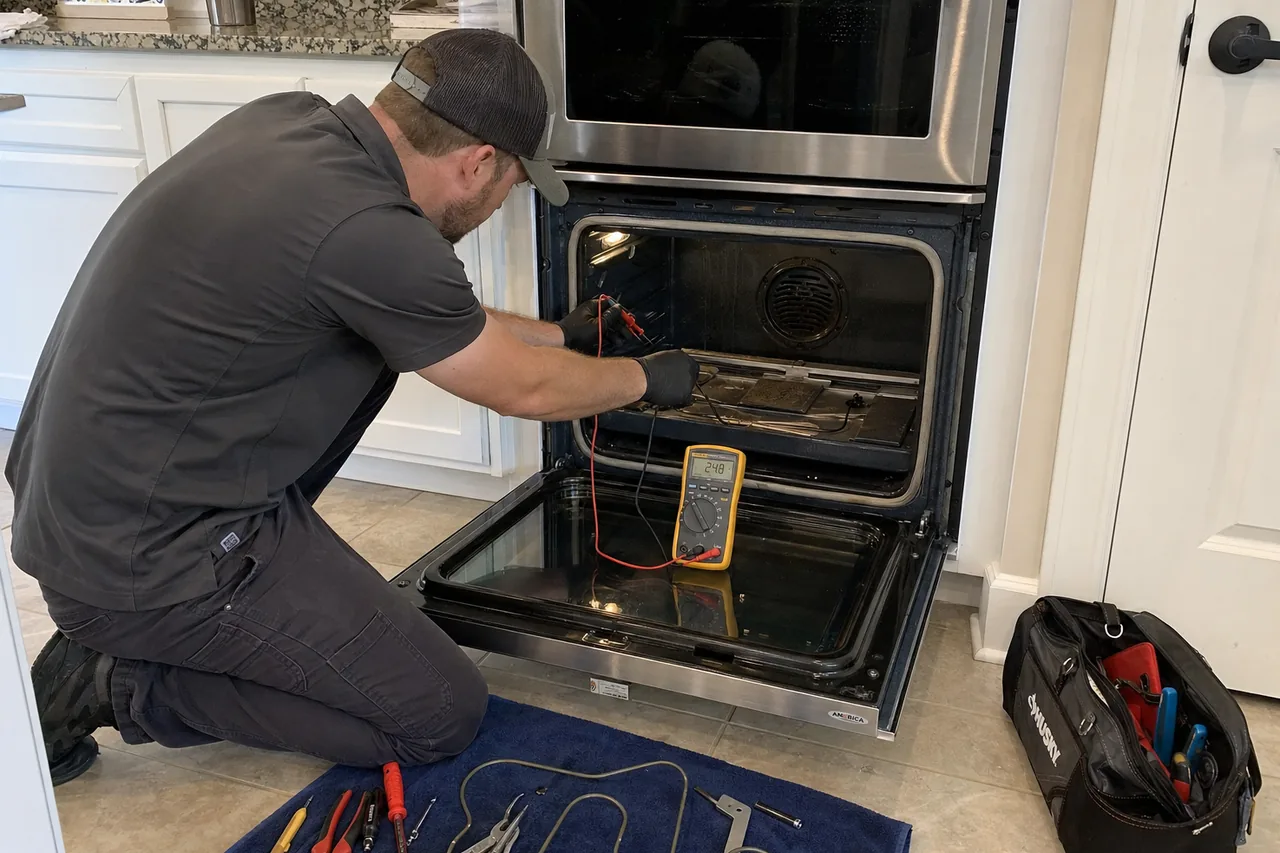
The Wolf oven temp probe is the plug-in food thermometer that fits a jack inside the oven cavity: push it fully into the jack, put the tip in the thickest part of the food, and set a target such as 145°F for a pork roast or 165°F for a chicken. If the oven doesn’t recognize the probe, or its reading disagrees with a trusted thermometer by more than about 5°F, the cause is usually a plug that isn’t fully seated, a dirty jack or a damaged cable, all things you can check in about 10 minutes.
If the whole oven runs hot or cold, that is the oven’s own temperature sensor or calibration instead, covered on our wall oven repair page.
How does the Wolf oven temp probe work?
The probe is a stainless steel spike with a sensor near the tip, a heat-resistant cable and a plug. When you plug it into the jack, the control detects it and asks for a target food temperature. The oven then cooks in your chosen mode while watching the center of the food instead of a timer, and it signals you when the target is reached.
Many Wolf wall ovens and the Wolf steam oven offer probe cooking, but not every mode accepts the probe. Broil is commonly excluded, so check what your display allows.
Where should the probe go, and what should you set it to?
Insert the tip into the thickest part of the food, at least halfway in, without touching bone, a seam of fat or the pan. Bone conducts heat and fat insulates, so either one can throw the reading off by several degrees. In a whole bird, aim for the thickest part of the thigh, away from the bone.
Route the cable so it doesn’t touch a heating element or get pinched by the door; a crushed cable often starts giving strange readings weeks later.
| Food | Set the probe to | Notes |
|---|---|---|
| Beef, pork, lamb roasts | 145°F | Rest 3 minutes |
| Meatloaf, ground meat | 160°F | Read the center |
| Chicken, turkey | 165°F | Thickest part of thigh |
| Fish | 145°F | Opaque, flakes easily |
These are the standard USDA minimum safe temperatures. The center keeps rising 5–10°F while meat rests, so for a higher doneness set the probe slightly below your goal.
Why won’t my Wolf oven recognize the probe?
When the display ignores the probe, or picks it up and then drops it, work through these causes in order. Most cost nothing to fix.
| Symptom | Likely cause | What to check |
|---|---|---|
| No probe prompt | Plug not fully seated | Push until it bottoms out |
| Prompt comes and goes | Grease in the jack | Oven off and cool, wipe the jack dry |
| Reading jumps or stalls | Kinked or crushed cable | Flat spots, cracks, exposed wire |
| Reads 10°F+ high or low | Moisture in probe, or tip in fat | Dry it; re-insert in lean meat |
| New probe still ignored | Jack wiring or control board | Technician diagnosis |
Two habits cause many of these failures. Soaking the probe or running it through the dishwasher lets water into the plug, so wipe it with warm, soapy water and dry it instead. And always remove the probe before self-clean, which is far hotter than the cable is built for.
How can you test the probe at home?
You only need a reliable instant-read thermometer and 3 steps.
- Check your reference thermometer in a glass packed with ice and a little water; it should read 32°F. White Plains sits only a couple of hundred feet above sea level, so boiling water should read close to 212°F as a second check.
- Cook a roast with the Wolf probe in place. When the oven signals, read the center with the instant-read thermometer, close to where the probe tip sits.
- Compare. A gap of a few degrees is normal because the two tips are never in exactly the same spot. A consistent gap of 10°F or more, on more than one cook, points to the probe or its circuit.
If cakes baked without the probe also come out wrong, suspect the oven’s own sensor instead. Otherwise a technician can measure the probe’s resistance and test the jack and wiring back to the control.
What does a repair cost if the probe isn’t the problem?
When the fault is inside the oven, these are typical ranges for Wolf work in the White Plains area: a diagnostic service call runs $95–$149, a thermostat or temperature sensor repair $280–$450, and control board or electronics work $400–$850. The firm quote is given on site after diagnosis; see our repair pricing page for the full list.
White Plains Wolf Appliance Repair is an independent service, not manufacturer-authorized. Call (914) 275-0968 to schedule a visit in White Plains, Scarsdale, Harrison, Hartsdale and nearby towns.
Frequently asked questions
Can I use another brand’s probe in a Wolf oven?
It is not a good idea. The oven control is matched to its own probe’s sensor, so another brand’s probe may not be recognized or may read wrong even if the plug fits.
Why does my roast read done but look raw in the middle?
The tip is probably not in the center; it may have passed through the roast or be touching bone or fat. Re-insert it halfway into the thickest section and confirm with an instant-read thermometer.
Can I replace a Wolf oven probe myself?
Yes, a replacement Wolf probe simply plugs into the jack. If a new probe still isn’t recognized, the fault is in the jack, wiring or control, and that needs a diagnostic visit.